Kallo and Other Stories by Sameena Nazir, translated from Urdu by Saira Mujtaba, is a collection of short stories first published in Urdu in 2021. A critically acclaimed work, it opens a window into the lives of communities in Pakistan, exploring queer relationships, women's passions and desires, their fears, and the many hypocrisies of society. Patriarchy, borders, religion, caste, and class become important themes in these stories. As the blurb rightly describes it, the collection is also a "masterclass in irreverent satire", using humour to expose the absurdities of the world we live in.
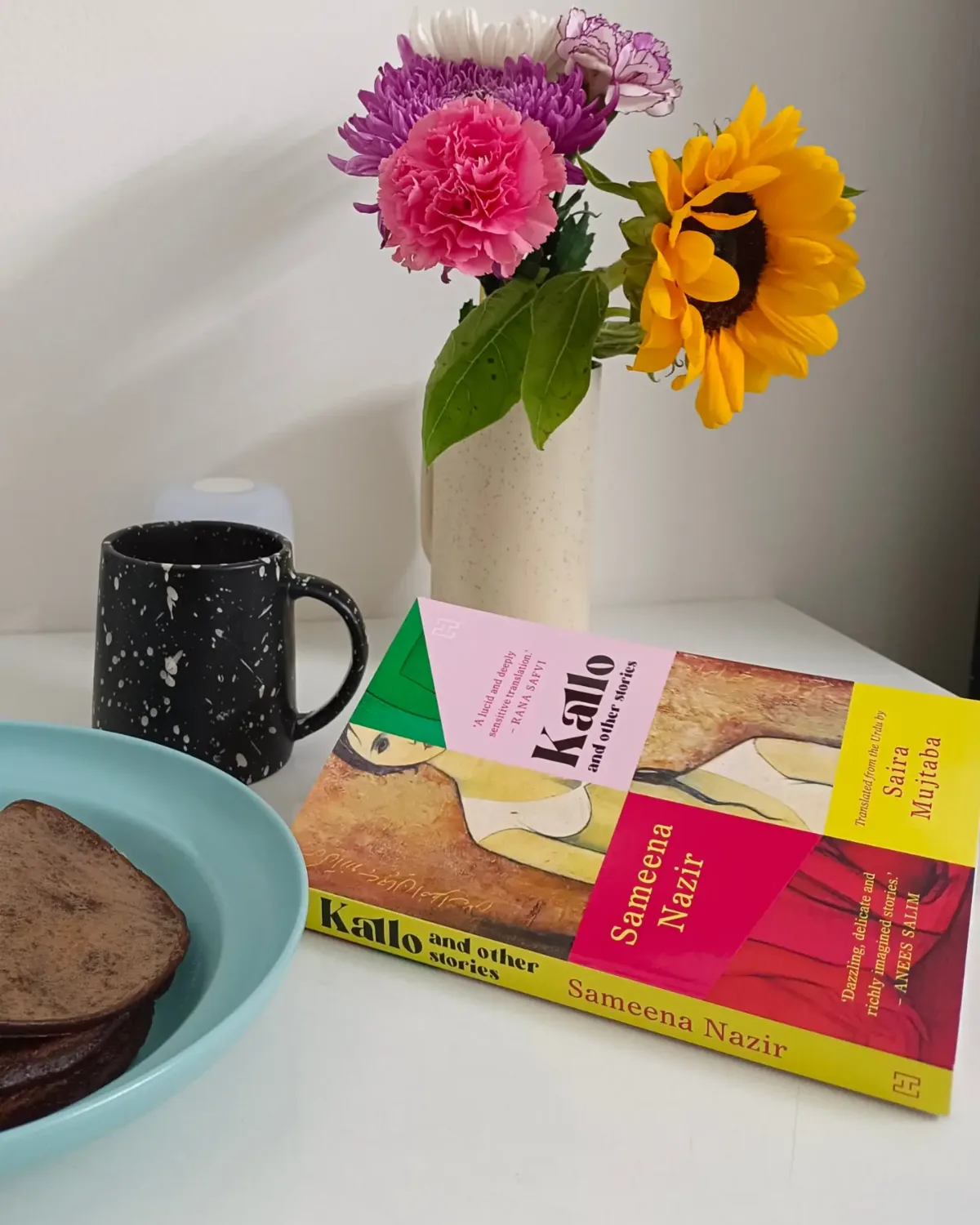
Most of the stories have female protagonists, focusing on queer relationships and women who dare to rebel against the expectations imposed on them. And that, for me, was one of the most beautiful aspects of this collection. The women here are not simply made to suffer at the hands of patriarchy. Even when they find themselves trapped in difficult circumstances, they resist, they rebel, and they find ways to reclaim something for themselves.
The opening story introduces us to Kallo, a young girl branded a whore by her own aunt for sleeping with her uncle. What makes the situation even more disturbing is that her uncle, Mamu, abuses her in the absence of his wife, yet Kallo is the one who is discarded from her aunt's home like a piece of stale bread while the man who exploits her escapes the same condemnation, and the girl becomes the target of shame and rejection.
The story runs parallel to that of Mushtari Bano, the wife of Hakeem Shatari, who has recently brought home a fragile nineteen-year-old girl as his new wife because Mushtari Bano cannot bear children. When Kallo is thrown out of her aunt's house, she begins living with Mushtari Bano, and a relationship gradually develops between the two women. Through their lives, Sameena Nazir brings out the complicated ways in which women seek affection, companionship, and freedom in a society that leaves little room for their desires.
The story Chouha was one of the most heartbreaking yet intriguing stories in this collection for me. It exposes the hypocrisy of people who wear religion as a veil to hide their cruelty and malicious intentions. Shama Khala is a powerful woman in her community, someone who conducts istikhara and prayer meets at people's homes and commands the respect and fear of other women. She is deeply particular about hygiene and purity, ensuring that every household where she conducts her prayers meets her standards. Even her two sons appear to follow the same disciplined, respectable path. From the outside, they seem like a family that has everything in order.
The story begins at Sughra's house, where women have gathered to pray for her daughter Bushra's marriage. But when a rat passes before Shama Khala's eyes during the prayers, her reaction is humiliating and cruel. She belittles the household, and the women who have gathered there leave, frightened by her authority and unwilling to invite her displeasure. What follows is a devastating turn of events. Sughra's life begins to fall apart, eventually leading her to take her own life. The revenge her daughter Bushra seeks thereafter becomes another tragedy, destroying not only her own life but also affecting the lives of others.
The story of Miss Razia is another powerful portrayal of how society treats a woman who refuses to bow down to its expectations. As long as she remains strong, independent, and someone people fear, she commands a certain respect. But the moment she allows herself to fall in love and seeks affection in her life, she finds herself vulnerable to betrayal and heartbreak. It is almost as if a woman is permitted to be powerful only until she reveals her need for love.
The story, Me Raksham, explores a queer relationship between men, adding another dimension to the collection's exploration of desire, intimacy, and relationships that society often refuses to acknowledge openly.
While reading "Kallo and Other Stories" , I found myself comparing it with "Heart Lamp" by Banu Mushtaq. Both collections bring out the complexities of women's lives and the society they inhabit.
Kallo and Other Stories, also stood out to me for its translation. I haven't read the original Urdu version, but the English translation feels so natural that, at times, it almost feels as if I am reading the stories in Urdu itself. The translator's decision to retain certain Urdu words rather than replace them with English equivalents or make the language sound more polished for an English-speaking audience gives the stories an appealing reach. It preserves the cultural nuances, the texture of the language, and the very essence of the world Sameena Nazir has created.